Product
Environment
-
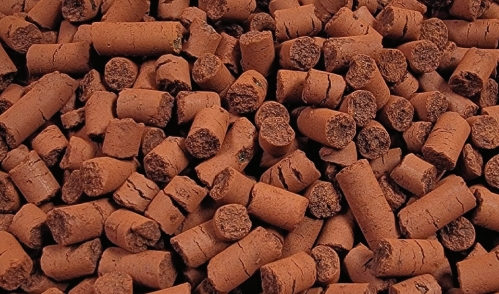 •Sectors Upstream-Offshore,Onshore production Mid Stream-NG gas processing,Storage Downstream-Refinery,Petrochemical,Syngas,CCUS Renewables-Anaerobic digester,Agriculture,Landfill,WWTP •Physical Properties Appearance/Odor........Pellet, odorless Efficiency for H2S Removal ............ >99.0% Particle Size........................4-5 mm (typ dia) Density ............................................... 71-81 lb/ft 3 •Applications Natural gas Acid gas (CO2) Biogas – RNG Syngas Hydrogen gas • Advantages High sulfur loading capacity (4,000 lbs/day) Low pressure-drop (SOR to EOR) – No caking High density (more lbs per vessel) – No powder Removes low concentrations of O2 Zero (0) H2S ppm outlet No oxygen required for best performance Easy cleanout Non-hazardous No preconditioning required Non-pyrophoric Drop-in replacement관리자 2025-05-09 500
 -
 The processing of spent caustic products for BOD / COD reduction, odor control, and pH adjustment to allow the final stream to meet specifications for wastewater treating facilities. For the treatment of sulphidic caustic solutions, an effective wet oxidation process should eliminate sulphidic pollutants and produces a brine solution that can be disposed of without adverse environmental effects. The oxidation system selected is based on the type of used caustic solution being treated and the brine effluent specifications. Depending on the degree of oxidation needed to meet the refinery effluent specifications, the refinery may choose to install a partial oxidation process or a total oxidation system or deep neutralization system.관리자 2023-09-20 951
 -

- Control of gaseous emission and dust in single-step solution
- Significant reduction in CAPEX 40% and OPEX compared to alternative technologies
- Catalytic filter bag or Catalytic Ceramic filter are available depending on applications.
- Handles temperature up to 260 °C (catalytic filter bag) or up to 400 °C(Catalytic Ceramic filter)
- Trap dust while removing NOx,dioxins, CO and VOCs in one single process
관리자 2023-06-26 934 -

The catalytic oxidation of VOCs. The catalysts are based on oxides of copper and manganese on an alumina, silica or cordierite carrier, or based on precious metals on a titanium dioxide carrier.
관리자 2023-06-26 1,142